Louvered Pergolas


Blog

What Is a Pergola? Purpose, Uses, Roof Types & Benefits
You have probably seen one over a patio: a few posts, a flat top, and plenty of open space around the sides. You may also have wondered what it actually does—especially when the roof appears to have gaps. The confusion makes sense. Today, the word pergola can describe anything from a simple wooden garden frame to an aluminum structure with a roof that opens and closes. In simple terms, a pergola creates a more comfortable, more purposeful place to spend time outside. What it can do depends largely on the roof above it. In This Guide Jump to the part of the pergola guide you need. What Is a Pergola? Purpose and Benefits Why Pergolas Have Open Roofs Pergola Roof Types Common Pergola Uses Main Types of Pergolas Pergola vs. Gazebo vs. Patio Cover How to Choose a Pergola Frequently Asked Questions What Is a Pergola? A pergola is an outdoor structure supported by posts or columns. Across the top, beams, slats, panels, or louvers create the roof area. Some pergolas attach to the house, usually beside a patio door. Others stand on their own in the yard, beside a pool, or over a separate seating area. Traditional pergolas often have spaced wooden beams across the top. They allow sunlight and air to pass through while creating some shade below. Modern pergolas may use fixed panels, shade screens, slat walls, or adjustable louvers to offer more control over the space. That basic combination—supporting posts, an overhead frame, and open sides—is what makes the structure a pergola. What Is the Purpose of a Pergola? So what is the point of a pergola in a real backyard? Its main purpose is to give one part of the yard a clear use. Imagine a dining table sitting by itself on a large concrete patio. It works, but the area may still feel unfinished. Add a pergola above it, and the same furniture begins to feel like an outdoor dining room. The posts mark the edges of the space. The roof draws the eye upward. Furniture, lighting, a grill, or a privacy screen now has a natural place within the layout. A pergola can also add shade without making the patio feel closed in. Open beams create filtered light. Fixed slats provide a steadier shade pattern. Adjustable louvers let you change the balance of sunlight and airflow during the day. This is the point of a pergola: it turns an exposed or loosely arranged outdoor area into a place designed for a particular part of daily life. Why Do Pergolas Have Open Roofs? The open roof comes from the pergola’s original role in gardens. Spaced beams created light shade, supported climbing plants, and allowed air to move through the structure. That design still works well when the goal is to keep a strong connection to the garden and sky. Sunlight filters between the beams instead of disappearing completely, and the space feels airy even when furniture sits underneath. An open roof does not always mean the same thing, however. The space between the beams, their direction, and the angle of the sun all affect the shade below. Modern pergolas give homeowners more roof options. They can keep the open feel of a traditional pergola while adding fixed slats, a retractable canopy, solid panels, or louvers that rotate as the weather changes. What Types of Roofs Can a Pergola Have? The roof is one of the most important parts to compare because it shapes how the space will feel throughout the day. And the main pergola roof types range from open beams to adjustable louvers. Pergola roof type What it feels like Shade and rain coverage Good fit for Open beams or lattice Bright, open, and closely connected to the garden Filtered shade with little rain coverage Garden seating and decorative spaces Fixed slats Open, with a more consistent shade pattern Partial shade; rain coverage varies by design Patios that need regular daytime shade Retractable canopy Soft and flexible Can be opened or closed; performance depends on the fabric and drainage Seasonal shade and casual seating Solid roof or panels More like a permanent patio cover Consistent overhead shade and greater rain coverage Patios where fixed shelter is the priority Adjustable louvers Open when wanted and more covered when needed Louvers can tilt for shade or close for overhead rain management Dining, lounging, and patios used in changing conditions An open-beam pergola suits a garden or patio where light, airflow, and visual structure matter most. A solid roof works better when the homeowner wants the same level of coverage throughout the day. A louvered pergola offers a middle path. Open the louvers for more light and airflow, tilt them for shade, or close them when more overhead coverage is needed. The exact performance depends on the product design, drainage system, installation, and local conditions. You can learn more in our guide to how louvered pergolas work. What Is a Pergola Used For? A pergola can work in many parts of a backyard, but the best layouts usually begin with one main activity. Outdoor dining A pergola gives a dining table a clear home on the patio. It can provide shade during daytime meals and support outdoor lighting for dinner after sunset. Measure the table with every chair pulled out. Guests should still have room to sit down and move around without running into a post. Grilling and outdoor cooking A pergola can bring a grill, prep counter, and nearby seating into one organized area. It works especially well when the grill already sits on a patio close to the kitchen. Plan around the grill manufacturer’s ventilation and clearance instructions. The pergola should support a safe, comfortable layout rather than crowding the equipment into a corner. Lounging and entertaining An outdoor sofa can feel lost on a large open patio. Under a pergola, it becomes part of a defined lounge. A shade screen may help with afternoon sun from one side. A slat wall can add privacy or provide a background for a TV area. Other sides can remain open to preserve airflow and views. Poolside seating A freestanding pergola can create a resting place beside a pool while keeping the main walkway open. Place the posts away from busy paths and leave room for cleaning, drainage, and movement around wet areas. Hot tub areas A pergola can make a hot tub feel more connected to the rest of the backyard. A privacy wall on one side may create a more comfortable setting, while open sides keep the space from feeling boxed in. For more examples, explore these louvered pergola ideas for dining, grilling, pools, and hot tubs. What Are the Main Types of Pergolas? Pergolas are often grouped in three different ways: where they stand, what they are made from, and how the roof works. An attached pergola connects to the house. It can make the patio feel like a natural extension of an indoor dining room or living room. A freestanding pergola supports itself with its own posts. It can sit farther into the yard, beside a pool, or over a separate grill and seating area. See our guide to freestanding vs. wall-mounted pergolas for a closer comparison. Pergolas also come in wood, vinyl, steel, and aluminum. Wood offers a warm, traditional look but needs regular care. Vinyl is relatively easy to maintain but comes in fewer finishes. Steel is strong but needs appropriate protection from corrosion. Aluminum is popular for modern pergola kits because it does not rot, requires relatively little maintenance, and works well with fixed or adjustable roof systems. Pergola vs. Gazebo vs. Patio Cover These structures may serve similar parts of a yard, but they create different kinds of outdoor spaces. Structure Typical roof Typical layout Overall feel Pergola Open, covered, or adjustable Attached or freestanding Open and flexible Gazebo Solid and often pitched Usually freestanding A separate sheltered destination Patio cover Fixed and usually solid Commonly placed beside the house A direct extension of the home A pergola is a good match when openness and roof choice matter. A gazebo creates a more separate gathering place, while a patio cover usually provides fixed coverage over the area closest to the house. Read the full pergola vs. gazebo vs. pavilion comparison if you are deciding between outdoor structures. How to Choose the Right Pergola for Your Space Start with the way you want to use the patio. A beautiful structure will have limited value if the furniture feels cramped or the shade falls in the wrong place. Ask yourself four questions: Will the space be used mainly for dining, grilling, lounging, or something else? Do you want filtered light, fixed shade, or a roof you can adjust? Should the pergola connect to the house or stand in another part of the yard? How much room do the furniture and walking paths need? Measure the full working area, not only the empty patio. Include chairs when pulled out, open doors, grill clearance, furniture depth, and the space taken up by the pergola posts. The supporting surface matters as well. Concrete, pavers, decks, grass, and gravel may require different preparation and anchoring. Confirm the surface and installation plan before selecting a model. Our pergola size guide can help you compare furniture layouts and standard dimensions. Frequently Asked Questions What is a pergola in simple terms? A pergola is an outdoor structure with posts supporting a roof frame. It creates a defined area for dining, relaxing, grilling, or enjoying the garden. Depending on the roof, it may provide filtered, fixed, or adjustable shade. What is the main purpose of a pergola? A pergola gives an outdoor area a clearer purpose. It frames furniture and activities within a defined space while adding shade and visual structure. The roof type determines how open or covered the area feels. Do pergolas provide shade? Yes, although the amount varies. Open beams create filtered shade. Fixed slats provide a more consistent pattern. Solid panels offer steady overhead shade, while adjustable louvers let you change the amount of direct sunlight. Do all pergolas have open roofs? No. Traditional pergolas usually have spaced beams or rafters. Modern pergolas may use fixed slats, retractable canopies, solid panels, or adjustable louvers. Each option provides a different balance of light, shade, airflow, and rain coverage. What can you put under a pergola? Common choices include dining tables, sofas, grills, prep counters, poolside loungers, and hot tubs. Plan the structure around the main activity and leave enough space for furniture, equipment, doors, and walking paths. What is the difference between a pergola and a gazebo? A pergola typically has a flat roof that may be open, covered, or adjustable. It can be attached or freestanding. A gazebo is usually freestanding with a solid, pitched roof, creating a more separate sheltered area in the yard. A More Purposeful Place Outdoors A pergola gives shape and purpose to an outdoor area. The right roof, size, and placement can turn an exposed patio into a comfortable setting for meals, weekends, and everyday time outside. Compare EaglePatio aluminum louvered pergolas by size, roof control, and outdoor use.
Learn more
5 Louvered Pergola Ideas Built Around How You Actually Live
Most pergola plans begin with a moment you would like to enjoy more often: dinner outside on a warm evening, friends gathered around the grill, a game playing by the pool or a quiet soak after dark. From there, the space takes shape through practical details. Furniture size, walking paths, afternoon sun and privacy all influence where the pergola should sit and how much covered space will feel comfortable. The five louvered pergola ideas below bring those pieces together through an outdoor dining area, grill bar, TV lounge, poolside retreat and private hot tub space. Each offers a different starting point for choosing a setup, size and model that fits naturally into your backyard. Which Louvered Pergola Idea Fits Your Backyard? Your main outdoor routine Start with Plan around Family meals Everyday dining area Table size, chair clearance and serving path Weekend grilling Outdoor kitchen or grill bar Heat, smoke and guest flow Movies and game days Outdoor living room TV glare, seating and side sun Relaxing by the pool Poolside lounge Walkways and wet/dry zones Private evening escapes Hot tub retreat Privacy, ventilation and cover access 1.Create an Everyday Outdoor Dining Area An outdoor dining area is one of the most practical ways to use a louvered pergola. It can turn an exposed patio into a place for weeknight dinners, weekend brunches and casual gatherings. Start with the dining table rather than the pergola dimensions. Measure the table with the chairs pulled out, then leave enough room for people to walk behind occupied seats. Check the route between the patio door, kitchen and table so family members can carry food without squeezing around a pergola post. Sun direction matters too. Adjustable louvers help manage overhead sunlight, but low afternoon sun may still enter through an open side. A Shade Screen or Adjustable Slat Wall can help if one side regularly becomes too bright or exposed. A common mistake is fitting the table under the roof while forgetting the space needed to use it comfortably. 2.Build an Outdoor Kitchen or Grill Bar An outdoor kitchen under a louvered pergola can create a comfortable place to cook and entertain, but this layout requires more planning than a dining area. Separate the cook’s work zone from the guest path. People should be able to reach their seats or drinks without passing directly behind the grill. If the space is narrow, a straight grill bar along one side may work better than a large island. An openable louvered roof can support airflow, but it does not replace the safety requirements of the cooking appliance. Heat, smoke and grease behave differently with each grill and kitchen layout. Always follow the grill manufacturer’s instructions for overhead and side clearances, ventilation and nearby materials. Before selecting a pergola, place the grill, prep counter and seating on a simple plan. Make sure the posts will not interrupt cabinet doors, cooking space or the main serving path. For more planning details, use a covered grill area checklist before finalizing the layout. 3.Design an Outdoor Living Room With a TV A louvered pergola with a TV can work well for movies, sports and relaxed evenings, especially when the layout addresses glare from the beginning. Place the TV first. Avoid positioning it directly opposite the strongest afternoon sunlight. Then arrange the seating around a comfortable viewing angle instead of pushing every sofa against the outer edge of the pergola. Adjusting the louvers can reduce overhead brightness, while a Shade Screen or Slat Wall may help control light entering from the side. The most useful accessory depends on the direction of the sun, not simply the appearance of the pergola. Use an outdoor-rated TV and weather-appropriate electrical equipment. A pergola roof does not make an indoor television suitable for outdoor use. 4.Add a Shaded Poolside Lounge A poolside louvered pergola should create shade without making the pool deck harder to use. Divide the area into a wet route and a dry lounge zone. Swimmers need a clear path between the pool, house and seating area. Keep posts, furniture and accessories away from this main route whenever possible. Position lounge chairs so adults can still see the pool. Adjustable louvers let users change the balance between sunlight and shade during the day, which makes the space useful for both sunbathing and cooling down. Also consider drainage, splashing and routine pool maintenance. A beautiful poolside pergola becomes inconvenient if a post blocks access for cleaning equipment or narrows an already busy walkway. See the Poolside Aluminum Pergola Guide for more detailed planning considerations. 5.Turn a Hot Tub Area Into a Private Retreat A hot tub louvered pergola can add shade and privacy while keeping the space open to fresh air. Before choosing the pergola position, check how the hot tub cover opens. Leave room for steps, entry, cover removal and future equipment service. A post placed too close to the tub may interfere with everyday use even when the tub technically fits beneath the roof. Privacy usually matters most on one or two sides. Instead of enclosing the entire structure, use a screen or slat wall where nearby windows, neighbors or a street create the greatest exposure. Keeping other sides open can support ventilation and preserve the outdoor atmosphere. Steam and moisture still need somewhere to escape. Follow the hot tub manufacturer’s installation, ventilation, electrical and service-access requirements. How to Choose the Right Setup Once you know your primary use, test the idea against your actual patio. Mark the approximate post locations with removable tape. Place the main furniture inside the outline and walk through the space as you normally would. Pull out chairs, open grill cabinets, carry a serving tray and check the route to the pool or hot tub. This simple test often reveals more than looking at an empty patio. Next, consider sun direction, privacy, surface conditions and the relationship between the pergola and the house. These factors will help you decide between an attached or freestanding configuration and whether side-shade accessories are useful. If you are still learning about adjustable roofs, read the Louvered Pergola Guide before comparing models. Frequently Asked Questions What can you use a louvered pergola for? Common uses include outdoor dining, grilling, entertaining, poolside seating and hot tub areas. The best setup depends on the activity you expect to enjoy most often, along with your available space and sun exposure. Can you put a grill under a louvered pergola? It may be possible with an appropriate layout, but the answer depends on the grill and pergola configuration. Follow the appliance manufacturer’s clearance, ventilation and fire-safety instructions. An open louvered roof should not be treated as a substitute for required ventilation. How do I choose a pergola size for an outdoor seating area? Measure the furniture while it is being used, not only when chairs are pushed in. Include walking space, door access and pergola post locations. Compare this complete footprint with the available standard pergola sizes. See more pergola size guide. Is a louvered pergola suitable beside a pool? A louvered pergola can provide adjustable poolside shade. Plan the structure around clear walking routes, pool visibility, drainage and maintenance access. Keep posts away from the busiest wet-area paths. Should I choose an attached or freestanding pergola? An attached pergola can connect closely with the house, while a freestanding pergola offers more placement flexibility. The right choice depends on the patio location, house structure, foundation and local building requirements. Start With the Life You Want Outside The strongest modern pergola ideas do more than improve how a backyard looks. They make a familiar outdoor routine easier to enjoy. Choose the routine first. Check the layout. Then compare the louvered pergola size, configuration and accessories that support it. See real backyard projects for more layout ideas, or compare EaglePatio louvered pergolas when you are ready to explore available options.
Learn more
Is a Pergola Worth It? Costs, Benefits, and How to Make It Worthwhile
A pergola is often worth the investment when it turns an exposed patio into a space you can use more often. By adding usable shade and defining an outdoor living area, it can make dining, relaxing, and entertaining outside more comfortable. A louvered pergola adds greater control over sunlight, airflow, and overhead coverage as conditions change. Ultimately, its value depends less on the structure alone than on how well the size, roof system, and installation plan match your needs, property, and total project budget. In This Guide Find the Answer You Need 01 Quick Answer ↓ 02 Why a Pergola Can Be Worth It ↓ 03 Four-Part Value Framework ↓ 04 Compare Pergola Types ↓ 05 Calculate Cost per Use ↓ 06 Long-Term Maintenance ↓ 07 When a Pergola May Not Fit ↓ 08 Does It Add Home Value? ↓ 09 Realistic Buying Scenarios ↓ 10 Frequently Asked Questions ↓ Are Pergolas Worth It? The Quick Answer A pergola is usually worth the investment when it solves a recurring outdoor comfort problem and supports activities you already enjoy. A Pergola Offers Strong Value When… The Value Is Strongest Because… Your patio becomes uncomfortable in direct sun Added shade creates more usable outdoor hours You regularly dine, grill, relax, or entertain outside The structure supports an existing routine You want an open-air space rather than a fully enclosed room You keep natural light and ventilation You expect to remain in the home for several years You have more time to enjoy the investment Your surface and anchoring plan are confirmed The project is less likely to face costly surprises You choose the roof and accessories around actual sun exposure You pay for features that improve daily comfort The decision is less favorable mainly when you only need temporary shade or expect a climate-controlled room. For most homeowners already planning to improve a frequently used patio, the better question is which pergola will create the most value. Why a Pergola Can Be Worth the Investment The return from a pergola is usually felt through improved use. Overhead shade can make an exposed patio comfortable for morning coffee, family meals, reading, or hosting friends. The structure also creates a natural zone for a dining table, outdoor sofa, grill station, or poolside seating without sacrificing the open-air feeling. A louvered roof adds flexibility. The louvers can open for light and airflow, angle to reduce direct sun, or close for greater overhead coverage during light rain. Low-angle sun can still enter through the sides, but a shade screen, slat wall, or landscaping can improve comfort. If heat is the main problem, compare patio shade options for hot backyards before planning the layout. Use This Four-Part Framework to Maximize Pergola Value The strongest projects align four factors: problem, use, property, and total cost. 1. Match the Pergola to the Actual Patio Problem Start with the reason you avoid the patio. Overhead sun calls for roof coverage; strong western sun may also require side shade. If conditions change throughout the day, adjustable louvers may provide more value than a fixed solution. Rain expectations also matter. A closed louvered roof can manage overhead sun and light rain while open sides preserve ventilation. Wind-driven rain can still enter, so select accessories and outdoor furniture accordingly. For a closer look at weather performance, see how louvered pergolas manage rain. 2. Build Around Activities You Already Enjoy Picture an ordinary week, not an idealized party. Will the pergola cover a table used several evenings a week, poolside seating, a grill area, or the place where you unwind after work? Repeatable uses justify the investment and guide the location, size, roof, and accessories. The best pergola is not necessarily the largest; it is the one designed around how you live. 3. Confirm the Property Before Ordering Review: The supporting surface and what lies beneath it Anchoring or footing requirements Patio drainage Furniture clearance and walking paths Sun direction throughout the day Wind and snow conditions Property setbacks, HOA rules, and local permits Access for delivery and assembly A concrete slab can be a straightforward starting point, but its thickness and condition matter. Pavers usually need support or footings beneath them rather than anchors placed only into individual stones. A wood or composite deck may need a structural review. For an older slab, deck, or uncertain paver base, have the proposed installation reviewed by a qualified contractor or structural professional and follow the manufacturer’s installation instructions. Before buying, check whether your patio can support a pergola and review the relevant pergola foundation requirements. 4. Compare the Total Project Cost The listed price is only one part of the investment. The complete budget may also include: Shipping and sales tax Site leveling or drainage improvements A concrete slab or individual footings Paver or deck reinforcement Professional assembly Permit or HOA fees Electrical work for a motor or lighting Shade screens, privacy walls, or other accessories Removal of an existing structure Confirm what each seller includes. A higher package price may offer better value if it includes delivery, necessary components, warranty coverage, or accessible replacement parts. If you are choosing between a kit and a custom-built structure, compare the complete cost to buy or build a pergola, not only the initial material price. Which Type of Pergola Offers the Best Value? Structure What You Gain Best Fit Traditional open-roof pergola Architectural definition and partial shade Homeowners focused on appearance, filtered light, or climbing plants Fixed-roof shade structure Consistent overhead coverage Patios where fixed shade is more important than changing light levels Louvered pergola Adjustable shade, airflow, and overhead rain management Homeowners who want more control over patio comfort and frequent use Solid patio cover More complete fixed overhead protection Spaces where permanent coverage matters more than open-roof flexibility Gazebo or pavilion A defined, permanently covered gathering area Larger yards suited to a visually heavier standalone structure Retractable awning Temporary wall-side shade Smaller spaces needing occasional shade beside the home For many homeowners considering a premium structure, a louvered pergola offers the strongest balance of open-air design and functional control. Its higher upfront investment can be worthwhile when roof adjustments make the patio comfortable more often. Motorization adds convenience but is not required. A manual roof may deliver the same core shade benefit at a lower cost; motorization may be worthwhile if quick adjustments matter to your routine. Compare a manual and motorized pergola. Calculate Cost per Use, Not Just Purchase Price Estimated cost per use = Total installed cost ÷ years of ownership ÷ annual days of use Suppose a hypothetical pergola project costs $15,000 after installation, foundation work, and necessary accessories. This figure demonstrates the calculation and is not presented as an average market price. Over ten years: Used four days per week: approximately $7.21 per use Used once per week: approximately $28.85 per use Used for eight events per year: approximately $187.50 per use The calculation shows why frequency matters. An outdoor area used throughout the week can deliver far more lifestyle value than one reserved for occasional events. The $15,000 example above illustrates how cost per use works—not what every pergola project must cost. A right-sized pergola can provide the shade and function you need without paying for unused space or features. Explore our options to find a pergola that fits your patio, lifestyle, and budget. Factor Maintenance Into Long-Term Value An aluminum pergola generally needs periodic washing, removal of debris from drainage channels, and inspection of fasteners and moving components. Wood may also require staining, sealing, or refinishing over time. Review the manufacturer’s care instructions, warranty requirements, and availability of replacement parts. A manageable care routine helps preserve appearance and function. When Might a Pergola Not Be the Right Fit? A pergola is designed for open-air living, so another solution may offer better value when: You only need low-cost, movable shade for occasional use You want a fully enclosed, insect-controlled, or climate-controlled room Existing trees or buildings already provide the shade you need You expect to move soon or cannot make permanent changes to the property Drainage, structural, permit, or HOA questions remain unresolved Primary Need Better Starting Direction Low-cost, movable shade Patio umbrella or shade sail Temporary shade beside an exterior wall Retractable awning Adjustable shade and airflow Louvered pergola Fixed overhead coverage Solid patio cover or pavilion Enclosed, insect-controlled space Screen room Climate-controlled addition Sunroom If several options appear suitable, compare a pergola, gazebo, and patio cover by shade, weather protection, foundation requirements, and expected use. Permit rules vary by location, structure size, and attachment method. Contact the building department before ordering; the USAGov local government directory can help identify it. Does a Pergola Add Value to a Home? A well-designed pergola can improve buyer appeal by making an outdoor area look intentional and usable. No universal resale percentage applies; local demand, design, materials, installation, and maintenance all influence financial value. The National Association of REALTORS® outdoor remodeling research examines cost recovery and homeowner enjoyment for selected outdoor projects. It does not establish a universal pergola ROI, but it highlights that resale recovery and personal enjoyment are separate forms of value. For most owners, the additional time spent comfortably using the patio is the more immediate and predictable return. Three Realistic Pergola Buying Scenarios EaglePatio Customer project in Dallas, Texas: A louvered pergola installed over a concrete patio to create shade for regular outdoor dining. Situation Likely Direction Why A sunny kitchen patio used for family meals Pergola; consider a louvered roof It solves a frequent problem and supports an existing routine Poolside seating that needs shade without feeling enclosed Louvered pergola The adjustable roof balances coverage, sky, and airflow A buyer wants heating, cooling, insect control, and full weather protection Screen room or sunroom The expected experience is indoor rather than open-air So, Is a Pergola Worth It? For most homeowners who want more usable shade and a defined outdoor living area, the answer is yes. A pergola can make an exposed patio more comfortable, extend the time you spend outside, and create a lasting place for dining, relaxing, and entertaining. A louvered pergola is especially worthwhile when you want more control over changing sun, airflow, and light rain rather than relying on fixed shade. The key is choosing the right size, roof system, and installation plan so the value appears in everyday use. Before ordering, confirm that: You know which patio problem the pergola will solve You expect to use the covered area regularly The size supports your furniture and walking paths The roof type matches your shade and weather expectations The supporting surface and anchoring plan are confirmed The total project cost fits your budget Local permit and HOA requirements have been checked Once those points are clear, you can compare aluminum louvered pergola sizes and roof options and choose the structure that best fits your patio. Frequently Asked Questions Are pergolas worth the money? Yes. A pergola can be worth the money when it makes a sunny or underused patio comfortable for regular dining, relaxing, grilling, or entertaining. Value is strongest when the structure and total project fit the property. Is a louvered pergola worth the extra cost? It often is if changing conditions limit patio use and you value adjustable shade, airflow, and overhead rain management. What costs should I include beyond the pergola price? Include delivery, taxes, site preparation, footings, anchoring, assembly, permits, electrical work, and accessories. Deck or paver installations may need reinforcement. Do pergolas provide enough shade? They can provide effective overhead shade. Results depend on roof design, orientation, louver position, and sun angle. Side screens or landscaping can help with low-angle sun. Are aluminum pergolas expensive to maintain? They generally need periodic cleaning, drainage-channel clearing, and hardware inspections rather than staining or refinishing. Follow the manufacturer’s care instructions. Does a pergola add value to a home? A pergola may improve usability and buyer appeal, but it does not guarantee a fixed resale return. Design, materials, installation, and local preferences all matter. Is a pergola better than a gazebo or patio cover? A louvered pergola suits adjustable shade and airflow; a gazebo or solid patio cover provides fixed coverage. Choose according to your weather expectations, space, and use.
Learn more
Louvered Pergola: The Ultimate 2026 Guide to Transform Your Outdoor Living Space
A louvered pergola is an outdoor structure with an adjustable aluminum roof that rotates from fully open to fully closed, giving homeowners complete control over sunlight, shade, and rain protection. This comprehensive 2026 guide covers the three main system types (manual, motorized, and smart automated), real-world costs ranging from $2,000 DIY kits to $55,000+ custom installations, material science behind why aluminum dominates the market, a side-by-side comparison with traditional pergolas, a 7-point buying checklist, DIY vs professional installation considerations, and a seasonal maintenance plan that takes just 45 minutes per year. Whether you are planning your first backyard upgrade or comparing premium systems, this guide provides every detail you need to make a confident, informed decision.
Learn more
Covered Grill Area Checklist: What to Check Before Cooking Under a Pergola
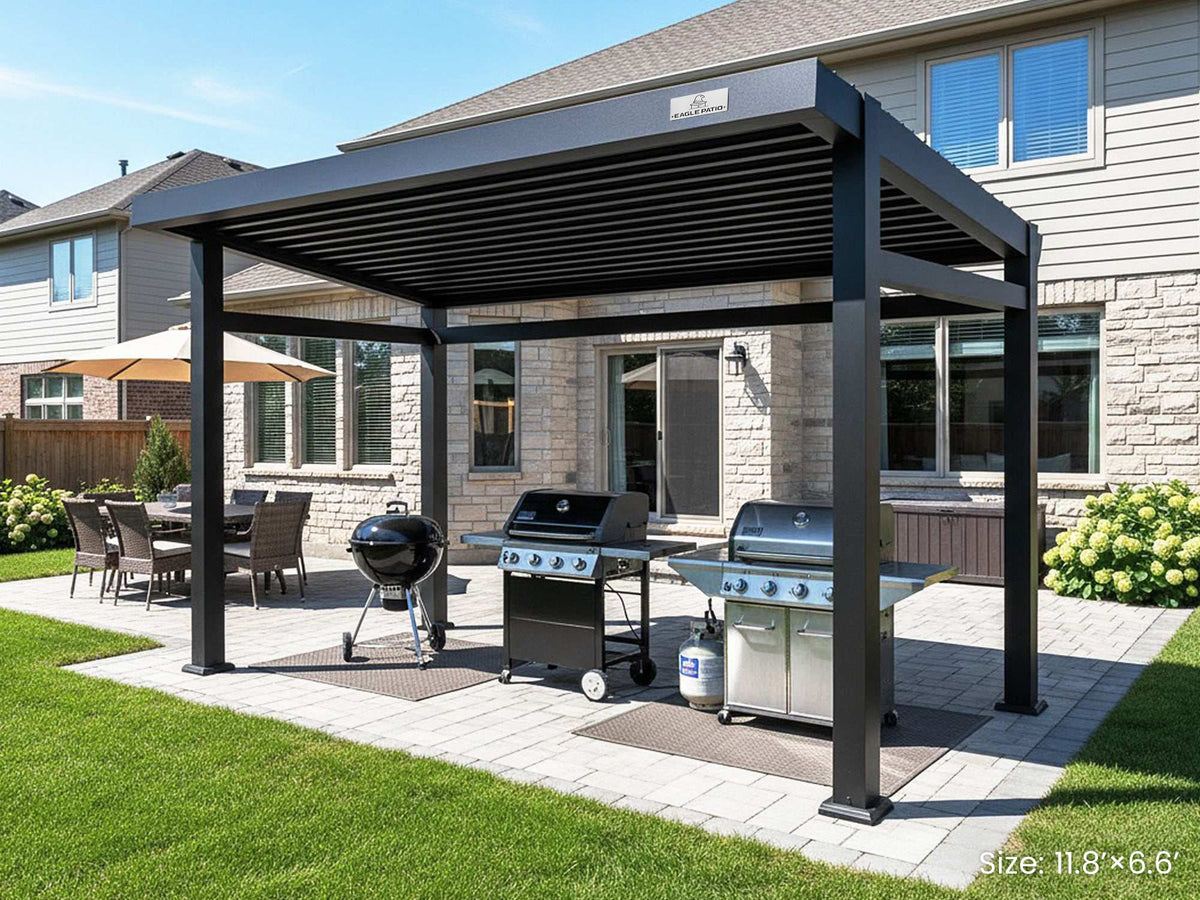
A covered grill area can make backyard cooking feel easier, cooler, and more social. But a good setup should not start with the roof style. It should start with the basics: the surface, the grill clearance, the airflow, the rain path, and how people actually move around the cooking zone. Many homeowners start with a photo of a beautiful outdoor grill station and think, “I want that.” The harder questions usually come later. Is the patio stable enough? Will smoke collect under the cover? Is the grill too close to a wall or fence? Can the grill lid open without hitting the roof? Will rainwater drain toward the house? Is there enough room for food prep and guests? This checklist will help you plan a covered grill area before choosing a pergola, grill shelter, or outdoor bar setup. A pergola can create shade and define the grilling zone, but it should never replace your grill manual, the pergola installation instructions, local codes, or basic fire-safety planning. The U.S. Fire Administration recommends using propane, charcoal, and wood pellet grills only outdoors, placing grills away from siding, deck railings, eaves, and overhanging branches, and maintaining a 3-foot safety zone around the grill. You can review the complete USFA outdoor grill safety guidance. Important: The 3-foot safety zone is a general fire- and burn-safety guideline. It does not replace the grill manufacturer’s required clearance from walls, overhead structures, or combustible materials. In This Guide Jump to the part of the covered grill area checklist you need. Covered Grill Area Checklist Patio Surface and Pergola Base Grill Clearance Airflow and Smoke Rain and Drainage Cooking and Guest Zones Grill Shelter vs. Grill Bar When to Pause Examples by Scenario Final Planning Checklist Frequently Asked Questions Covered Grill Area Checklist Before adding a cover over your grill area, check these seven things: What to check Why it matters What to look for Patio surface and base Supports stable anchoring Level concrete or another properly supported foundation Grill clearance Reduces heat and fire risks Follow the grill manual and applicable local requirements Airflow Helps smoke and heat move out Open sides, adjustable louvers, and an unobstructed smoke path Rain and drainage Keeps water from pooling Roof runoff, patio slope, gutters, and side-rain exposure Cooking layout Makes grilling easier Room for the grill, lid opening, prep surfaces, and tools Guest traffic Keeps people away from heat Clear walking paths outside the cooking zone Lighting and storage Supports evening BBQs Task lighting, counters, hooks, and tool storage A covered grill area is not just about keeping sun off your face. It should make cooking more comfortable without creating new problems around heat, smoke, water, or crowding. Start With the Patio Surface and Pergola Base A grill pergola is not patio furniture. Once it is anchored, the surface becomes part of the whole setup. That is why the patio base should be checked before the grill, bar counter, or furniture layout. Concrete Patio A concrete patio is often the easiest surface to evaluate because it is usually more stable and anchor-friendly than loose materials. Still, you should check for cracks, slope, edge distance, and whether the slab is level enough for a pergola base. If the patio slopes toward the house, rainwater and grease cleanup may become a long-term problem. If the slab is cracked or thin, it may need additional review before anchoring. Paver Patio Pavers can look solid on the surface, but the real question is what is underneath. A paver patio sitting on sand or gravel may shift over time, especially if posts are anchored only into loose pavers. Before installing a grill pergola on pavers, check whether the paver base is stable, whether footings are needed, and whether the installation method matches the pergola manual. Do not assume that a clean-looking patio is ready for structural anchoring. Wood or Composite Deck Deck setups need extra care. You are not only checking the deck boards. You are checking the joists, beams, posts, and overall load path. A grill, a pergola, people, and furniture all add weight. Heat and grease also matter. If your grill area is on a deck, confirm the structure can support the setup before treating it like a standard patio. Grass, Gravel, or Uneven Ground Grass, soil, and loose gravel usually need more foundation work before supporting a fixed pergola. They may require concrete footings, a slab, or another stable base. This is where it may be smarter to pause, take photos, measure the space, and review your options before buying. Check Grill Clearance Before Adding Any Cover Shade should never be the reason a grill gets placed too close to a wall, fence, roofline, or guest seating area. Different grills have different clearance requirements. Gas grills, charcoal grills, pellet grills, smokers, and griddles should not be treated the same. Always follow the grill manufacturer’s manual first. Local fire rules, HOA guidelines, and appliance instructions may be stricter than a general backyard planning article. Watch the areas around the grill: House siding Deck railings Eaves and rooflines Fences Windows and doors Overhanging branches Furniture Guest walkways A pergola can help define and shade a cooking area. It does not make an unsafe grill placement safe. The safest wording to keep in mind is simple: comfort features come after clearance. If the grill manual requires more space, adjust the layout before adding a cover. Plan Airflow Before You Think About Shade In a covered grill area, shade is the obvious benefit. Airflow is the hidden test. Smoke behaves differently under a roof or pergola. If the grill area is open on multiple sides, smoke and heat have more room to move. If the grill sits in a corner with a house wall behind it, a fence on one side, and a cover above it, the space may feel too enclosed. Before choosing a grill shelter, ask: Is the grill area open enough on the sides? Is the grill too close to a wall or fence? Can heat rise and move away? Will guests block the open path? Can the roof be adjusted during cooking? This is where a louvered pergola can be useful. Adjustable louvers can help you tune shade and airflow while cooking. EaglePatio’s N5 grill pergola, for example, uses louvers that tilt up to 90° so users can open them for airflow and sunlight or close them for shade and protection. Still, louvers are not magic smoke removers. Smoke control depends on grill type, wind direction, nearby walls, and how open the surrounding area is. A good airflow example is a grill under a pergola with open sides, louvers opened during cooking, and no wall directly behind the smoke path. A poor airflow example is a grill tucked into a narrow corner with fencing, siding, furniture, and a low cover all around it. That setup may look cozy in photos but feel smoky in real use. Think About Rain From the Top A covered grill area can help with overhead rain, but most backyard weather problems come where the water goes after it leaves the roof. Overhead rain is the water falling directly from above. A louvered roof or covered grill shelter can reduce how much of that reaches the grill area. Drainage also matters near the house. Look at where rainwater flows after it leaves the structure. Does it move toward the lawn? Toward a drain? Toward the back door? Toward the foundation? EaglePatio’s N5 uses an 8° sloped roof and a rain management system that guides water into built-in gutters and down through the back posts. The N5E also uses a concealed gutter system that channels rainwater through the beams and posts, with separated water and electric systems. That kind of drainage can help manage roof runoff. Leave Room for Cooking, Prep, Serving, and Guests A covered grill area works best when the cook is protected, the food has a place to land, and guests can stay close without crowding the heat zone. Think in zones. Cooking Zone This is the grill, smoker, griddle, or cooker itself. Leave room for the grill lid to open, for the cook to stand comfortably, and for heat to move away. Prep Zone This is where plates, tools, seasoning, raw food, and trays go. Without prep space, every cookout turns into repeated trips between the grill and kitchen. Serving Zone This can be a side table, counter, bar top, or drink station. It keeps guests from gathering directly beside the grill. Guest Traffic Zone People should not have to walk through the cooking zone to reach a chair, cooler, or back door. If the layout forces guests to pass behind the grill, the space may need to be reworked. For a simple setup, a grill shelter may be enough. For a hosting-focused setup, counter space, lighting, and tool storage may matter as much as the cover itself. Simple Grill Shelter vs Grill Bar Setup: Which Fits Your Patio? The right covered grill area depends less on the product name and more on how you cook. If you mostly need shade over one standalone grill, a compact grill shelter may be enough. If you cook with multiple grills, host guests, serve drinks, or grill after dark, a more complete grill bar setup may make more sense. User Need Better Fit Why One standalone grill N5 Lite Compact shelter for basic grilling Multiple grills or grill + prep station N5 Plus Wider coverage while keeping a slim depth Small patio or side yard N5 Space-saving covered grill area BBQ + drinks + guests N5 E Countertops and bar-style flow Evening grilling N5 E Integrated lighting helps after dark Tool organization N5 E Pegboard and hooks keep tools close EaglePatio’s N5 Lite is 7.2’ × 6.6’ and designed for a single standalone grill, while the N5 Plus is 11.8’ × 6.6’ and built for multiple grills or a cooking-and-prep setup. The N5 E adds dual-side countertops for food prep, drinks, or socializing, plus RGB LED lighting and pegboard storage for tools. A grill bar pergola does not replace a full built-in outdoor kitchen. It sits between a basic grill cart and a major outdoor kitchen project. For many homeowners, that middle option is exactly the point. When to Pause Before Building a Covered Grill Area Sometimes the smartest move is to stop and review the space first. Pause before installing if: Your grill manual requires more clearance than the space allows. The area is too enclosed for smoke and heat to move out. The patio surface is cracked, uneven, or unstable. Pavers shift underfoot. A deck has not been checked structurally. Rainwater drains toward the house. You need gas, electrical, or permit work. HOA approval is unclear. You expect full storm protection from a covered structure. A covered grill area should make outdoor cooking easier. It should not create fire risk, drainage problems, or a smoky corner that no one wants to use. Covered Grill Area Examples by Scenario Narrow Side Yard Grill Setup A narrow side yard can work well if the grill does not block the walking path. Keep the setup slim, open, and easy to access. A compact shelter like the N5 Lite may fit this use case if clearance, airflow, and surface conditions are all acceptable. Single Grill Patio Setup For one gas grill or charcoal grill, you may not need a full outdoor kitchen. Focus on shade, stable anchoring, open sides, and a small prep surface. Multi-Grill or Grill + Smoker Setup Multiple cookers need more width, more airflow, and more planning. Smoke and heat can build quickly if the layout is too tight. A wider cover may help, but only if the space remains open enough. Grill Bar for Casual Hosting If your BBQ area is also where people stand, drink, and talk, counter space changes the experience. This is where a grill bar setup like the N5 E makes more sense than a simple shelter. Rain-Prone Backyard Setup If sudden showers are common, look at both roof drainage and side exposure. A built-in drainage system can help with overhead rain, but wind-driven rain still needs to be considered. Final Covered Grill Area Planning Checklist Before choosing a pergola or grill shelter, collect these details: Grill type and model Grill width, depth, and lid-open height Patio size Surface type Nearby walls, fences, windows, doors, and eaves Drainage direction Main wind exposure Guest walking path Whether you need prep space Whether you grill after dark Local code or HOA concerns Photos from several angles The best covered grill area is not always the biggest one. It is the one that fits your surface, grill type, airflow, and hosting style. If you are unsure, share your patio size, surface type, grill dimensions, and a few backyard photos with the EaglePatio team. A quick layout review can help you decide whether a compact grill pergola or a grill bar setup makes sense. FAQ Can you grill under a pergola? In some open-air setups, yes. But you need to follow your grill manual, local code, clearance requirements, and airflow guidelines. A pergola can improve shade and comfort, but it does not replace safe grill placement. What should I check before creating a covered grill area? Start with the patio surface, pergola base, grill clearance, airflow, drainage, guest traffic, lighting, and prep space. If any of those are unclear, pause before buying or installing. Will smoke get trapped under a pergola? It depends on the grill type, wind direction, louver position, nearby walls, and how open the space is. Adjustable louvers can support airflow, but they do not guarantee smoke removal in every layout. What surface is best for a grill pergola? A stable, level, anchor-ready surface is best. Concrete is often easier to evaluate. Pavers, decks, gravel, grass, and uneven ground usually need closer review. Is a grill pergola the same as an outdoor kitchen? No. A grill pergola creates a covered cooking zone. A full outdoor kitchen usually includes built-in appliances, cabinets, plumbing, utilities, and more construction. A grill bar pergola can sit between the two. Can I use a covered grill area in light rain? A covered grill area can help reduce overhead rain. Side rain, wind direction, and drainage still matter. Do I need a permit for a covered grill area? Permit requirements depend on your location, structure size, anchoring method, HOA rules, and whether gas or electrical work is involved. Check local requirements before installation. How much clearance does a grill need under a cover? There is no universal clearance number for every grill and cover. Check your grill manufacturer’s manual first, then confirm local code and surrounding materials. If the required clearance does not fit your patio, do not add a cover until the layout is adjusted. Can a covered grill area go on pavers? It may be possible, but pavers should not be judged by appearance alone. Check the paver base, movement, anchoring method, and product installation requirements before placing a fixed grill pergola on a paver patio.
Learn more
Best Patio Shade Ideas for Hot Backyards: Pergola vs Awning vs Gazebo
If you are searching for patio shade ideas because your backyard feels unbearable by mid-afternoon, the problem is usually bigger than “too much sun.” It may be direct afternoon exposure, heat radiating from concrete or pavers, glare from nearby walls or water, poor airflow, and a shade option that does not match the way the sun actually hits your backyard. That is why the best patio shade idea is not always the biggest structure or the most expensive one. A small umbrella may work for a dining table. A retractable awning may be perfect for a west-facing wall. A gazebo may give the most fixed roof coverage. A louvered pergola may be the better long-term choice if you want adjustable shade, airflow, rain management, and a more finished outdoor living area. This guide compares the most common backyard shade ideas so you can choose based on heat, sun direction, wind, privacy, surface type, and how you actually use your patio. In This Guide Compare the most common patio shade ideas and find the best option for your sun direction, heat problem, patio surface, and outdoor living goals. Why your patio feels so hot in the afternoon Quick answer: match your shade problem to the right solution 7 patio shade ideas for hot backyards Pergola vs awning: which is better? Gazebo vs pergola: shade comparison Are aluminum pergolas good for hot states? Does a pergola actually make a patio cooler? Before choosing a pergola, check your patio surface How to choose the best patio shade option FAQs Why Your Patio Feels So Hot in the Afternoon Many homeowners notice the same pattern: the patio feels fine in the morning, but by 2 or 3 p.m., nobody wants to sit outside. In hot states like Texas, Arizona, California, and Florida, that late-day heat can make a patio feel unusable for dining, grilling, lounging, or watching kids play outside. Afternoon sun is difficult because it often comes from a lower side angle, especially on west-facing patios. Overhead shade may help at noon, but it may not block sunlight that cuts under the roofline later in the day. This is why side shade, privacy screens, awnings, and adjustable louvers can matter as much as a roof. Hard surfaces also make the problem worse. Concrete, pavers, stucco walls, and pool decks can absorb and reflect heat. The CDC notes that UV exposure is highest in summer and between 10 a.m. and 4 p.m., and its school shade guidance explains that shade protection depends partly on reflected UV from surrounding surfaces such as sand and concrete. Expert note: Before choosing a shade structure, look at where the sun hits your patio after 2 p.m. Product photos may show a beautiful backyard, but your real comfort depends on sun angle, surface heat, airflow, and side exposure. For long-term outdoor use, look for powder-coated aluminum, UV-resistant finishes, corrosion resistance, and a drainage design that matches your climate. Quick Answer: Match Your Patio Shade Problem to the Right Solution If Your Patio Problem Is… Best Starting Option Why You need quick, low-cost shade Patio umbrella Movable, simple, and affordable You need budget shade over a larger area Shade sail Covers more space if properly tensioned You need wall-side afternoon sun protection Retractable awning Works well for attached patios You want a fixed covered sitting area Gazebo or pavilion Gives consistent roof coverage You want adjustable shade and airflow Louvered pergola Lets you control sun, shade, and ventilation You need shade plus privacy Pergola with privacy screen Helps block side sun and neighbor views You have pavers under the patio Check anchoring first Surface conditions matter for permanent structures 7 Patio Shade Ideas for Hot Backyards Patio Umbrella A patio umbrella is the fastest way to add shade. It works well over a small dining table, lounge chair, or compact patio. It is also renter-friendly and easy to move. The downside is coverage. Umbrella shade moves as the sun changes, and the base may not feel stable in windy areas. If your patio gets strong afternoon side sun, an umbrella may leave part of the seating area exposed. Best for: small patios, quick shade, low budgets. Watch out for: wind, limited coverage, and low-angle sun. Shade Sail A shade sail can cover more area than an umbrella and works well for poolside seating, casual backyard lounges, or budget-friendly shade over a wide space. But shade sails need strong anchor points, proper tension, and the right angle for drainage. They can flap in wind if poorly installed, and they usually do not provide complete rain protection. Best for: large casual shade areas. Watch out for: anchor points, wind movement, and drainage slope. Retractable Awning A retractable awning is one of the best options for a patio attached to the house, especially when the sun hits a wall, sliding door, or window. The U.S. Department of Energy says window awnings can reduce summer solar heat gain by up to 65% on south-facing windows and 77% on west-facing windows, which helps explain why awnings are effective for wall-side sun. Awnings are less ideal if you want to define a full outdoor room away from the house. They also need to be retracted in certain wind conditions. Best for: attached patios and west-facing walls. Watch out for: wind limits and smaller coverage zones. Gazebo or Pavilion A gazebo gives strong fixed roof coverage. It works well for a dedicated seating or dining area where you want consistent shade throughout the day. The tradeoff is flexibility. A gazebo roof does not adjust, and the structure can feel visually heavy on a smaller patio. In humid areas, a more enclosed structure may also feel less airy than an open pergola. Best for: fixed shade and traditional backyard structures. Watch out for: size, style, airflow, and installation space. Covered Patio A covered patio is the most permanent roof-like option. It can provide strong weather protection and may feel like an extension of the house. It also usually requires more planning, more budget, and sometimes permits. If you want a simpler outdoor upgrade without building a roof extension, a pergola, awning, or gazebo may be a more practical covered patio alternative. Best for: permanent roof coverage. Watch out for: cost, construction time, and permit requirements. Louvered Pergola A louvered pergola is a strong option for homeowners who want more than temporary shade. Unlike a regular open pergola, a louvered roof can be adjusted to control sunlight, shade, and airflow. When the louvers close, the roof can also help manage light rain, depending on the design and installation. This makes an aluminum louvered pergola especially useful for outdoor dining, grill areas, poolside seating, and hot patios where comfort changes throughout the day. It can also pair with shade screens or aluminum slat walls for extra privacy and side sun control. Best for: adjustable shade, airflow, and long-term outdoor living. Watch out for: installation surface, anchoring, wind exposure, and budget. Trees, Vines, and Green Shade Trees and vegetation are excellent long-term shade solutions. The EPA explains that trees and vegetation lower surface and air temperatures by providing shade and cooling through evapotranspiration. The limitation is time. A young tree will not solve this summer’s heat problem right away. Vines and planted pergolas can also require maintenance and careful placement. Best for: long-term natural shade. Watch out for: growth time, maintenance, and unpredictable shade coverage. Pergola vs Awning: Which Is Better for a Hot Patio? Choose an awning if your main problem is sun hitting one side of the house. For example, if your patio gets hot near a sliding door or west-facing wall, a retractable awning may block that direct exposure more efficiently than a freestanding structure. Choose a louvered pergola if your goal is to create a more complete outdoor living area. A pergola can define a seating zone, dining space, poolside lounge, or grill area. Adjustable louvers give you more control over overhead light, and side screens can help with low-angle sun. Factor Retractable Awning Louvered Pergola Best for Wall-side sun Full patio living area Shade control Extend or retract Adjust louver angle Airflow Open underneath Open-air structure Wind consideration Often needs retracting Depends on rating and anchoring Privacy options Limited Can add screens or slat walls Outdoor room feel Moderate Strong Expert verdict: An awning may be the better direct fix for one hot wall. A louvered pergola is usually stronger when you want to make a larger patio usable for more hours of the day. Gazebo vs Pergola: Which Gives Better Shade? A gazebo gives more fixed roof coverage. If you want a permanent shaded sitting area and do not care about adjusting light, a gazebo or pavilion can work well. A pergola feels more open and flexible. A regular pergola offers partial shade, while a louvered pergola gives more control because you can change the roof angle. This is helpful when the sun shifts throughout the day. Choose a gazebo if you want full-time fixed cover. Choose a louvered pergola if you want shade, airflow, and a modern outdoor living feel. Are Aluminum Pergolas Good for Texas, Arizona, California, and Florida Heat? Aluminum can get warm in direct sun, but that does not mean an aluminum pergola makes the patio hotter. The comfort of the seating area depends more on shade coverage, airflow, surface heat, and how the louvers are positioned. For hot climates, aluminum has practical advantages. It is low maintenance, does not rot like wood, and is commonly used for outdoor structures because it handles weather exposure well when properly finished. In dry Arizona heat, airflow and overhead shade matter. In Texas, wind and afternoon sun may be bigger concerns. In Florida, humidity, rain, corrosion resistance, and anchoring need more attention. In California, poolside glare and outdoor dining comfort may drive the shade plan. Region Common Patio Problem Shade Planning Tip Texas Afternoon sun and wind Prioritize adjustable shade and anchoring Arizona Dry heat and concrete surfaces Combine overhead shade with airflow California Pool glare and outdoor dining Use adjustable shade without closing the space Florida Humidity, rain, and wind Check drainage, corrosion resistance, and anchoring Does a Pergola Actually Make a Patio Cooler? A pergola does not cool outdoor air like an air conditioner. It works by reducing direct sunlight, limiting radiant heat on furniture and flooring, and making the seating area more usable. That difference matters. A shaded chair can feel much more comfortable even when the weather app shows the same air temperature. EPA archived heat island guidance notes that shaded surfaces may be 20–45°F cooler than peak temperatures of unshaded materials, which supports the general value of shade for hot surfaces. This should not be read as a product-specific promise, but it does show why shade can change how a patio feels. Side shade can be just as important. If your patio gets low-angle afternoon sun, adding a shade screen or slat wall may improve comfort more than adding more overhead coverage. Is a Louvered Pergola Waterproof? Think of a louvered pergola as a rain management structure, not a sealed indoor roof. When the louvers are closed, the roof can help manage light rain and direct water toward a drainage path, depending on the system design. But wind-driven rain, heavy storms, installation quality, and side exposure still matter. No outdoor pergola should be treated like a fully sealed room. Before buying, check how the louvers close, where water drains, whether the posts or gutters direct runoff properly, and what the manufacturer says about rain use. Can a Pergola Withstand Wind? Some pergolas are designed for strong wind performance, but wind safety depends on more than the frame. Anchoring, surface type, installation quality, structure size, and local exposure all matter. A pergola on a sheltered concrete patio may perform differently than one in an open, windy backyard. FEMA severe wind guidance also reminds homeowners to secure outdoor objects because wind can turn loose items into hazards. Before choosing a pergola, ask: What is the wind rating? What surface will it anchor to? Is the patio exposed or protected? Are local permits or HOA approvals required? Who will handle installation? Safety note: A wind rating only matters when the pergola is installed according to manufacturer requirements and anchored to a suitable surface. Before Choosing a Pergola, Check Your Patio Surface Permanent shade structures need more planning than umbrellas or shade sails. Concrete patios, paver patios, decks, gravel areas, and older slabs all have different anchoring needs. A pergola can often be planned over a paver patio, but loose pavers should not be treated as the structural foundation. In many cases, posts need to connect to a stable base, footing, or approved anchoring system below the finished surface. If your patio is built with pavers, gravel, soil, or an older slab, read a full pergola foundation guide before choosing your kit. This helps you avoid buying a structure that looks right in photos but cannot be safely installed in your actual backyard. Add Privacy Screens for Shade, Comfort, and Neighbor Privacy Privacy screens are not only for blocking views. They can also help with low-angle afternoon sun, glare, and wind comfort. For example, a west-facing seating area may still feel hot under a roof if sunlight enters from the side after 4 p.m. A shade screen, aluminum slat wall, or outdoor curtain can make the area feel more comfortable and private. Accessory Best For Benefit Shade screen Flexible side shade Helps reduce sun, wind, and visibility Aluminum slat wall Structured privacy Adds design, separation, and partial shade Outdoor curtains Soft decorative shade Budget-friendly but less durable Plants or vines Natural privacy Long-term, slower solution How to Choose the Best Patio Shade Option Start with these six questions: What time of day is your patio too hot? Is the sun coming from overhead or from the side? Do you need temporary shade or a permanent structure? Do you need airflow? Do you need rain or wind performance? What surface will the structure sit on? Do not choose a louvered pergola first if you only need temporary shade, if your budget is very limited, or if your surface is not ready for anchoring. In those cases, an umbrella, shade sail, awning, or foundation review may be the better first step. But if you want to turn a hot patio into a more usable outdoor living space, a louvered pergola is worth comparing. It offers adjustable shade, open-air comfort, optional privacy screens, and a more finished backyard experience than temporary shade products. Final Recommendation The best patio shade idea depends on your real problem. Use an umbrella for quick shade. Use a shade sail for budget coverage. Use an awning for wall-side afternoon sun. Use a gazebo for fixed roof coverage. Use a louvered pergola when you want adjustable shade, airflow, rain management, privacy options, and a long-term outdoor living upgrade. Ready to make your patio usable beyond the hottest hours of the day? Compare EaglePatio aluminum louvered pergolas and shade accessories to find a setup that fits your sun direction, patio surface, and backyard goals. FAQs What is the best way to shade a patio? The best way depends on sun direction, budget, wind, and how permanent you want the solution to be. Umbrellas and shade sails work for quick shade. Awnings help wall-side sun. Louvered pergolas work well for adjustable shade and long-term outdoor living. What is the best patio shade for afternoon sun? Afternoon sun often comes from a low side angle. A retractable awning, side shade screen, slat wall, or adjustable louvered pergola may work better than overhead shade alone. Is a pergola good for shade? Yes, but the type matters. A regular open pergola provides partial shade. A louvered pergola gives more control because the roof slats can be adjusted to block or filter sunlight. Is a pergola better than an awning? Not always. An awning is often better for attached patios with wall-side sun. A pergola is better if you want to define a larger outdoor seating, dining, or grill area. What is better, a gazebo or pergola? A gazebo gives more fixed roof coverage. A pergola feels more open and flexible. A louvered pergola is usually better if you want adjustable shade and airflow. Does a pergola make a patio cooler? A pergola does not cool the air like AC, but it can reduce direct sunlight and radiant heat on the seating area. That can make the patio feel more comfortable. Are aluminum pergolas hot in the sun? Aluminum can get warm in direct sun, but patio comfort depends more on shade coverage, airflow, surface heat, and louver position than on the frame material alone. Is a louvered pergola waterproof? A louvered pergola can help manage rain when the louvers are closed and the drainage system is properly designed. It should not be treated as a fully sealed indoor roof. Can a pergola withstand wind? Some pergolas are designed for strong wind performance, but safety depends on the product rating, anchoring method, installation surface, and local exposure. Can I install a pergola on pavers? A pergola can often be planned over a paver patio, but loose pavers alone should not be treated as the structural foundation. Check a full pergola foundation or paver installation guide before buying.
Learn more